

Table of Contents
- Introduction
- What is SEO?
- What is PPC?
- Key Differences Between SEO and PPC
- Advantages of SEO
- Advantages of PPC
- Choosing the Right Strategy
- Why Techno Deviser Can Help You
- FAQs
1. Introduction
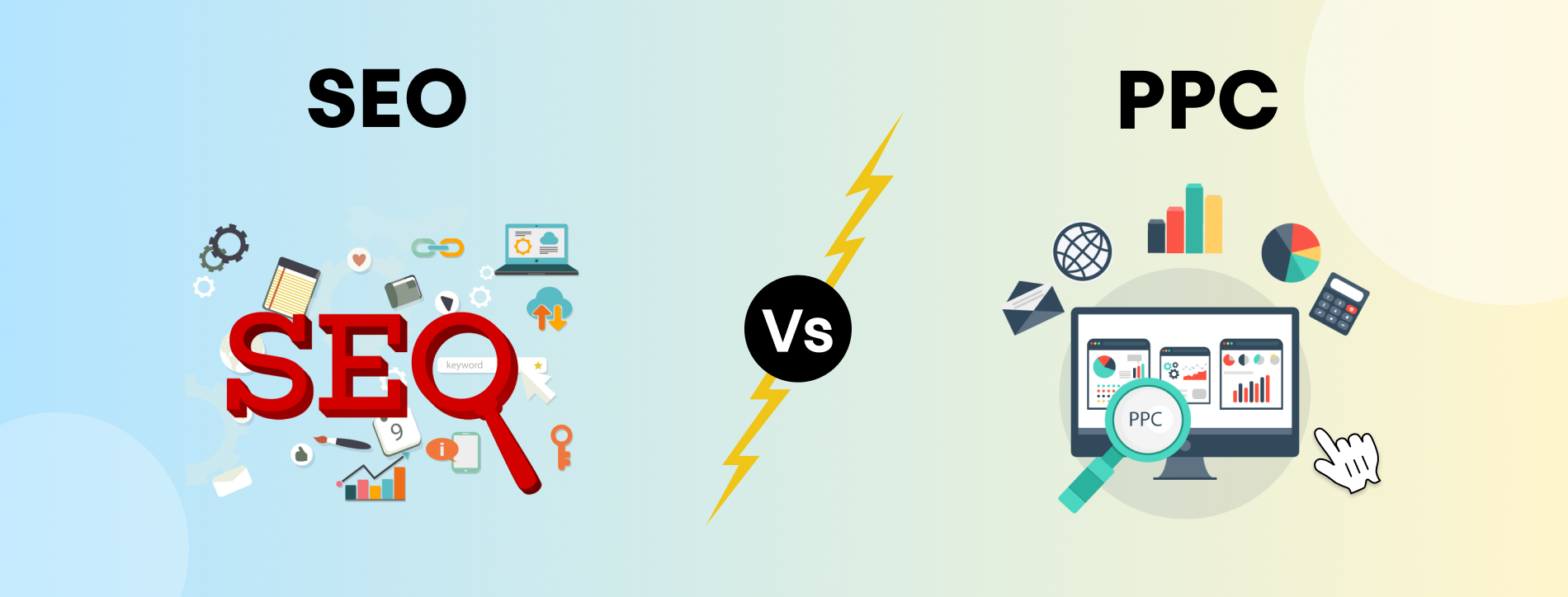
In today’s digital age, businesses commonly rely on two strategies to promote their brands online: SEO (Search Engine Optimization), which stands for search engine optimization and PPC, which is short for pay-per-click. They are both used to drive Website traffic but they work in different ways.
SEO is a way of increasing organic traffic by improving your content, acquiring backlinks, and optimising the performance of the website you are using. It is the long-term business strategy that creates the trust of the client and gives a long-term return on the investment. On the other hand, PPC is a paid form of marketing that gives immediate visibility through paid ads according to popular keywords, age, gender, or other activity performed by users. Nonetheless, the performance lasts only as long as the ad spends and so does RSL.
Usually, it depends on your company’s needs and how much money you are willing to spend. This means that pay-per-click is useful for one’s business when he or she wants fast results, and SEO is useful when the man or woman wants to attain sustainable growth. Using both may give the best of both worlds: the quick win based on the old system and steady, progressive success derived from the new system.
2. What is SEO?
SEO is a unique technique applied to making a website appear on search websites such as Google, Bing and even Yahoo. Through increasing the site’s position within the SERPs this technique naturally brings more unique, organic visitors. They are on-page optimization of the content, the use of keywords and phrases in the page content and the creation and use of quality backlinks to the site.
It also pays attention to other aspects, such as the loading time of the page, the compatibility with a mobile device, and the usability of a site. While it may take days, weeks, months, or even years before a site climbs up the list, it has long-term advantages. Such an approach assists businesses to attain a constant and stable stream of visitors to sites and better their reputations not to mention the high rates of return on investment.
This includes working through maintenance of the platform, for example keeping an eye on algorithm changes, and keeping content timely. When used in the right manner, This is more than just a useful asset to any firm that intends to enhance its online market share and increase its followership.
3. What is PPC?
PPC also known as Pay per click refers to an online advertising model where a trader pays a certain amount of money for each click that an individual makes to access their ad. This method affords immediate exposure as the advertisement normally pops up at the top of search engine results or on web pages of interest to the target audience. PPC is effective for the immediate traffic generation to the business, where companies get an opportunity to attend to users who are interested in some specific products or services.
Google Ads, Bing Ads and the current popular social media sites such as Facebook, Instagram and LinkedIn are some of the well-known platforms of PPC. These platforms leave business organizations capable of focusing on the audience through aspects like; keywords, demographics, geographical location, interests, and users’ activities. Another great benefit is the possibility of controlling the budget as businesses can input a daily or campaign ceiling which cannot be overstepped.
In PPC, it is easy to track the results instantaneously and this makes it easy to conduct relevant metrics such as click-through rates, conversion rates and most importantly the rate of return on investment. What can be said about PPC is that although it provides instant traffic, the ad will cease given that there is no more budget for it; hence, it is a stopgap. Hence, PPC is frequently utilized alongside other approaches to create a likewise and consistent digital marketing mix: Search Engine Optimization.
4. Key Differences between SEO vs PPC

5. Advantages of SEO
(a) Cost-Effective: Since SEO does not require a business person to pay for individual clicks, it is among the most cost-effective strategies. It differs from traditional PPC advertising strategies which require the client to pay for each advert placed rather than achieving organic/natural traffic through keywords, content and backlinks. It is also less costly to the business compared to having to spend recurrent expenditures to attract that same amount of traffic.
(b) Sustainable Results: The first and absolute top benefit of SEO is that this strategy guarantees lasting, long-term results. After a site has reached a position among the top SERPs it can produce a rather steady amount of traffic for quite a long period without any more financial investment. This long-term impact of SEO makes it a worthy investment if organisations are to achieve solid and long-standing adoption of the online platform.
(c) Trust and Credibility: While there is a clear preference among users to click organic search results as opposed to paid ones, users also believe that organic search results are more credible in comparison to paid ones. Through SEO, companies ensure that they attain good rankings so that they can build credibility with their intended clients because they seem genuine within that particular field. This trust translates to higher click-through rates and in return better engagement and conversion rates.
(d) Better ROI: Though SEO requires a fair amount of time for the results to be produced; still it has more reverse-yielding potential than pay-per-click advertising. This allows the website to deliver a better cost per acquisition as the rank increases and organic traffic grows over time. The SEO results are long-lasting and companies continue to enjoy the returns on their investment for as long as several months and even years after the initial SEO process.
6. Advantages of PPC
(a) Immediate Results: The first advantage of PPC advertising is that it provides the desired exposure as soon as the ad is created. Once a campaign is initiated, your ads immediately begin to show up at the top of the search or on a related site. This fast result enables businesspersons to direct traffic to their websites as soon as possible, making PPC suitable for those who desire instantaneous outcomes in campaigns, new product releases, or during sales periods.
(b) Targeted Audience: This means that compared with other conventional advertising techniques, PPC campaigns allow us to target users right down to the exact location preferentially. Advertisers can target parameters of age, gender, interest, and/or income level and/or geographical area. A key advantage of the low level of targeting is that it can identify people who are very likely to be interested in the product or service being marketed and will thus be more likely to respond to an ad. Besides, it helps businesses to target specific audiences for improved results and even apply the same process to achieve even better levels of targeting.
(c) Flexible Budget: PPC provides excellent control for the daily or weekly budget or any campaign on which a business wants to spend a particular amount on advertising. Regardless of whether you’re launching a small local promotion or a nationwide advertising campaign, you can include only the necessary amount of funding in the budget. This flexibility makes PPC a more attractive marketing technique for organizations of all sizes for the simple fact that; based on their ad budget, they can adjust the intensity of their PPC campaigns.
(d) Measurable Performance: A great benefit of pay-per-click advertising is that it is relatively easy to monitor in real timef. Rich statistics are available to obtain more specific information about click-through rates, conversion rates and the cost per click. The data enables marketers to assess the performance of their campaign, make informed decisions and align the management of ad copy, targeting and spending with the best results achieved. The open nature of performance measurement makes it possible for a firm to make improvements to its strategy to get the most favourable results.
7. Choosing the Right Strategy
Choosing between SEO and PPC depends on your business goals and budget:
• Go for SEO if you want long-term, sustainable growth: SEO is the best strategy if you desire to create an impressive, long-term online presence and targeted free traffic. When you invest in SEO, what you do is you are improving your website and content with the hope that you will rank higher in the future. This may take more time to show effectiveness, but once your website is established, and you’re ranking high in the search engine result pages, you can get a continuous flow of targeted traffic without having to spend more on paid ads. While SEO is an effective way of guaranteeing steady and long-term growth within the online realm, it is most cost-efficient.
• Use PPC if you need quick results and have a flexible budget: This is the best solution for PPC if you require traffic to your website immediately or if you have other objectives that will require immediate achievement, for instance, having a special offer that is limited in time or when your business has just introduced a new product. Here with PPC, you can set your ads live instantly from the campaign creation process and have them visible immediately. Thanks to this factor, if you are flexible on your budget and want your ads to appear in front of certain people, in certain locations or doing certain things, PPC will help you do this. PPC is highly desirable for the business in the short term due to the possibility of controlling the budget and getting nearly immediate results.
• Combine both for maximum benefits: In fact, it is common knowledge that combining search engine optimization with PPC will yield better results for most companies. It allows you to achieve short-term objectives and at the same time create a robust long-term strategy for your online engagement. For instance, utilize PPC to power traffic instantly, accomplish ad copy experimenting, and target alternative markets at the same time as you focus on your SEO techniques for organic rankings and popularity in the long haul. An integrated marketing communication strategy makes it possible for you to have a high chance of achieving both short-term and long-term goals by ensuring that you get high visibility, increase customer interest and attention and at the same time enjoy the benefits of high returns on your investment.
8. Why Techno Deviser Can Help You
At Techno Deviser, we understand that this statement is not entirely true because, initially, it seems as if no two business entities can be the same, and no formula or set of approaches to digital marketing should be the same for two different companies. We have a well-trained staff with the main aim of ascertaining our client’s needs, and goals as well as the economic niche he or she intends to venture into. With such a level of understanding, we decide and create the proper digital marketing strategy, as well as the specific SEO strategy you want and need.
Whether you believe in using SEO or PPC or both as your long-term strategy, our professionals work with you to ensure that you optimize the results for each strategy. In the case of continuous performance evaluation and the changing process of idea implementation by matching to trends on the market, there presents better improvement. Here at Techno Deviser, we have a corporate vision with an unambiguous focus to drive high traffic to your website and then convert such traffic while increasing your company’s visibility.
Out of passion and accuracy, we assure you that with proper digital strategies, including the unique SEO Packages that have been developed just for your company; the digital effect will only be positive for the business towards the intense and oversaturated market. Together with you, we will point out the proper strategies so that you can secure perfect planning for business development that will facilitate the achievement of your business goals.
9. FAQs
1. What is the main difference between SEO and PPC?
SEO targets the natural type of traffic from search engines while PPC targets traffic from paid ad sections.
2. Can I use both SEO and PPC together?
Indeed, it’s effective to use both SEO and PPC simultaneously because people get the best of both worlds, short-term and potential long-term gains.
3. Which is more cost-effective: SEO or PPC?
Another thing to remember is that with SEO you usually pay less in the long run and with PPC you have to pay continuously.
4. How long does it take for SEO to show results?
SEO typically requires 3-6 months and it might more depending on the niche’s competition and the approach that is taken.
5. How can Techno Deviser help my business with SEO and PPC?
Our professional at Techno Deviser helps its clients achieve maximum results in SEO and PPC and provides each client with an individual approach.